The short version
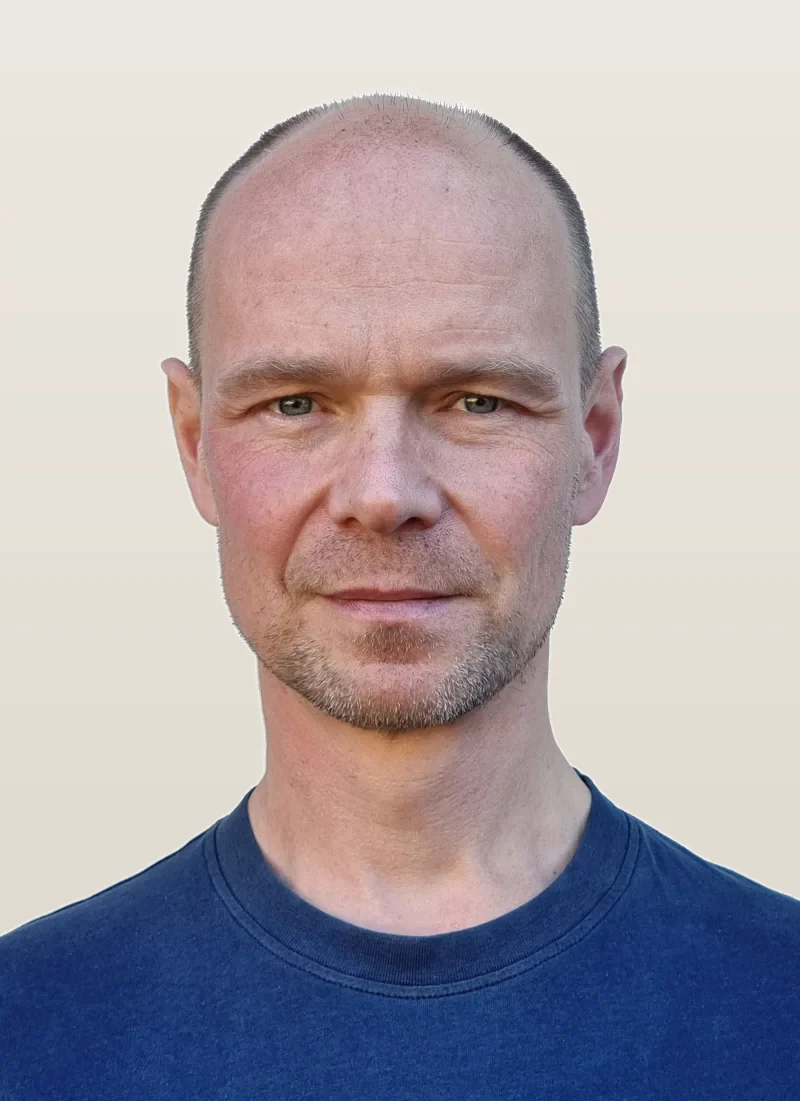
Rafal Bergman (PhD, PMP, Oxford Executive Leadership) is a London-based technology executive, serial founder, and AI engineering leader. He has founded four companies, raised venture capital, built AI systems that deliver measurable business outcomes at enterprise scale, and exited all four. He is currently Director of AI Engineering at OpenAsset. Through CTO Zen he builds always-on AI agents that run processes end to end for mid-market and PE-backed companies of 50 to 500 people, and takes a small number of fractional CTO roles. He works independently, with no platform to sell and no agency behind him, on a simple conviction: the engineering is the easy part, and leadership and judgement are what decide whether AI actually delivers.
The full story
From research to production
Rafal began his career at the intersection of academic research and commercial application. His PhD in Computer Science focused on problems that mattered beyond the lab, and he built his first company, GeoVS, to commercialise that research. GeoVS attracted venture capital, was developed into a production product, and was ultimately sold to SRT Marine Systems in a trade sale. That arc, from research idea to VC-backed startup to successful exit, shaped how he thinks about technology: it has to work in the real world, not just in a presentation.
Building for global enterprise
After selling GeoVS, Rafal became CTO of SRT Marine Systems, the company that acquired it. Later he moved into enterprise-scale technology leadership at Improbable, the unicorn simulation technology company (£3B+ valuation) known for its work with NATO, the MoD, and the Royal Navy. Building platforms that operate in 30+ countries, at defence-grade reliability, develops a different kind of engineering rigour. You learn that architecture decisions made at day 100 determine whether you succeed at day 1,000.
His earlier work at Hong Kong Polytechnic University and IBM added international range: cross-cultural technology leadership and delivery in highly regulated, high-stakes environments.
Building and exiting companies
After GeoVS, Rafal co-founded Codiance, a software engineering agency delivering digital transformation projects and building new products. He exited via trade sale to a co-founder to pursue new opportunities. He then joined IQDEV as VP of Software Engineering, leading digital and AI transformation consulting for clients across the UK, Europe, and USA, securing innovation grants and building a proprietary no-code AI platform, before exiting that venture too.
These weren't side projects. Each was a business built, operated, and sold. Four exits across different technology contexts means the lessons are pattern-level, not anecdotal.
The AdBrain chapter: AI in production
At AdBrain AI, Rafal co-founded and led the engineering of an agentic AI system that became one of the most concrete examples of AI delivering measurable commercial outcomes. The system, built for one of Europe's largest insurance brokerages, handled end-to-end customer case management autonomously. Not routing. Not suggestions. Full resolution.
AdBrain was Rafal's fourth successful exit. This is the kind of AI leadership that separates him from most advisors in this space: not strategy decks, not vendor evaluations, but production systems that move business metrics. Read the case study →
Public sector at scale
As Chief Product & Technology Officer at NHS Wales, Rafal led technology transformation at national scale. A 300-strong technical organisation responsible for digital innovation and a strategic portfolio of national products underpinning healthcare delivery. He redefined product management and contracting approaches, identifying £28M in recurring annual savings with £1M delivered and £5M in implementation during his tenure. He also served as Technical Lead for the Welsh Government Commission for AI in Health & Social Care, contributing to the development of the national AI adoption strategy.
Interim CTO
At Mentor360, Rafal stepped in as Interim CTO after an unexpected senior technical departure. The scenario every funded startup dreads. He stabilised the engineering team, secured a Royal Navy contract, and guided the product through a technically demanding period. That engagement is the closest real-world analogue to what a Fractional CTO engagement looks like.
Now: AI agents that run the work
Today, Rafal builds always-on AI agents that run a company's processes end to end: insurance claims intake, credit control, order entry, contract renewals, project reporting. His clients are mid-market and PE-backed companies of 50 to 500 people whose work is growing faster than their teams, and who have tried AI without getting it to run anything.
The method is the one that took the AdBrain system to 67%: the data before any model, a narrow first scope, shadow mode and then a small share of live volume, an audit trail from day one, and a person on every decision that matters. How every agent is built.
He still takes a small number of fractional CTO roles, for companies that need senior technology leadership as well as a working system. He does all of this alongside his role at OpenAsset.
The beliefs behind how he leads, and how he lives, are set out in his own words in The capacity for greatness.
Career
- 2025–presentOpenAssetDirector of AI Engineering
- 2025Mentor360Interim CTO. Secured Royal Navy contract.
- 2024–2025NHS WalesChief Product & Technology Officer, national healthcare technology transformation. Technical Lead, Welsh Government AI Commission.
- 2023–2025AdBrain AI ExitCo-founder & Head of AI Engineering. Production agentic AI at enterprise scale.
- 2022–2023ImprobableEngineering Manager (Defence). NATO, MoD, Royal Navy. 30+ countries.
- 2021–2022IQDEV ExitVP of Software Engineering. Digital and AI transformation consulting.
- 2018–2021Codiance ExitCo-founder & Head of Software Engineering. Software agency.
- 2016–2019Infinity GroupCEO, UK Division. Clients included Nikon, TUI, MetLife, Allianz, Kingfisher Group.
- 2013–2016SRT Marine SystemsCTO. Team of 50+. 30+ countries. £400M+ in sales. National Project of the Year (Bahrain).
- 2009–2013GeoVS ExitFounder. VC-backed deep tech. Sold to SRT Marine Systems.
- 2003–2005IBMSoftware R&D Manager. Centre of Excellence. ING Bank, Polish Government.
- 2001–2002Hong Kong Polytechnic UniversitySoftware Engineering Team Lead. Research in spatio-temporal GIS.
Qualifications & recognition
MSc with Distinction. PhD research commercialised into two products.
Saïd Business School, University of Oxford.
Project Management Professional. NVIDIA-Certified AI Professional in generative AI and production ML.
Awarded by His Majesty the King for the Maritime Domain Management System.
Creative Catalyst Grant. Nationally selected from hundreds of applicants.
Analytical rigour under cross-examination by Senior Counsel.
Ergonomic navigation of complex multidimensional datasets. Granted in US, GB, and EU.
Across ventures and products built or led.
Publications
- Digital Blueprint for NHS Wales (2026). A free systems-dynamics analysis of Digital Health and Care Wales, the national digital body of NHS Wales: 11 feedback loops, seven system traps, six sequenced interventions and a costed 36-month reform plan, built only from the public record. CC BY 4.0. Case study.
- Bergman, R. (2026). Structural Failure in National Health IT: A Systems-Dynamics Case Study of Digital Health and Care Wales. Working paper. DOI: 10.5281/zenodo.21444618.
- Bergman, R. (2026). A Federated Architecture and Operating Model for National Digital Health at Small-Nation Scale: A Design Blueprint for NHS Wales. Working paper. DOI: 10.5281/zenodo.21445084.
ORCID: 0009-0009-0254-0215
What I've come to believe
Twenty-five years in, a few convictions have hardened into the way I work.
That the engineering was always the easy part. For a deep technologist it is the masterable, predictable bit. Leadership is the hard part that decides whether any of it counts. I learned that the expensive way, and have written about it honestly.
That in the agentic era you cannot plan a journey through territory nobody has mapped. You set a destination and navigate to it daily, with the decision-makers in one room, correcting course as you learn.
And that good advice has no hidden agenda. I have no platform to sell, no licence fees and no agency bench to keep busy. When I recommend a build, I am the one accountable for whether it works, and when an off-the-shelf product will do the job better, the audit says so.
If any of that resonates, we will probably get on.